How to Choose the Right Kitchen Cabinet Style for Your Home’s Architecture

You’ve finally decided to remodel your kitchen. You’ve got a budget, a vision, and maybe even a Pinterest board with 47 saved photos. But when it comes to actually choosing your kitchen cabinet style, things get complicated fast.
This guide covers practical, high-impact small bathroom remodel ideas that homeowners, renters upgrading their space, and property investors can implement right now. No structural engineering required.

Floor space is the most precious commodity in a small bathroom. The moment you add a freestanding storage unit, a laundry basket, or a bulky vanity, you reduce the visual footprint and make the room feel cramped. The solution is to think vertically and recessed.

Here’s the truth most homeowners don’t hear until it’s too late: The “best” kitchen cabinet style isn’t just about what looks pretty – it’s about what fits your home. Choosing a sleek, ultra-modern flat-panel cabinet for a classic Colonial will feel off. So will heavy ornate cabinetry in a contemporary open-plan home.
At HSH Design Inc. in Wilmington, MA, we help Massachusetts homeowners navigate this exact decision every day. This guide walks you through how to match kitchen cabinet styles to your home’s architecture – so your renovation feels cohesive, adds real value, and looks intentional rather than accidental.

Why Your Home’s Architecture Matters When Choosing Cabinets

Think of your home’s architecture as the story it’s already telling. The rooflines, trim details, window shapes, and exterior style all set a visual tone. Your interior – especially your kitchen – should feel like a continuation of that story, not a contradiction of it.
When cabinet style clashes with architecture, even a technically well-executed kitchen can feel somehow “wrong” without the homeowner being able to pinpoint why. When they align, everything clicks into place naturally.
This doesn’t mean you’re locked in with zero flexibility. But it does mean starting with your home’s style and working forward from there – rather than falling in love with a cabinet door profile first and trying to reverse-engineer a justification.

Common New England Home Styles and the Cabinet Styles That Fit Them

Massachusetts has a wonderfully diverse architectural landscape – from centuries-old Colonials to mid-century ranches to modern new builds. Here’s how to match cabinets to the most common styles you’ll find across the Wilmington, Burlington, and greater Merrimack Valley area.

1. Colonial and Traditional Homes
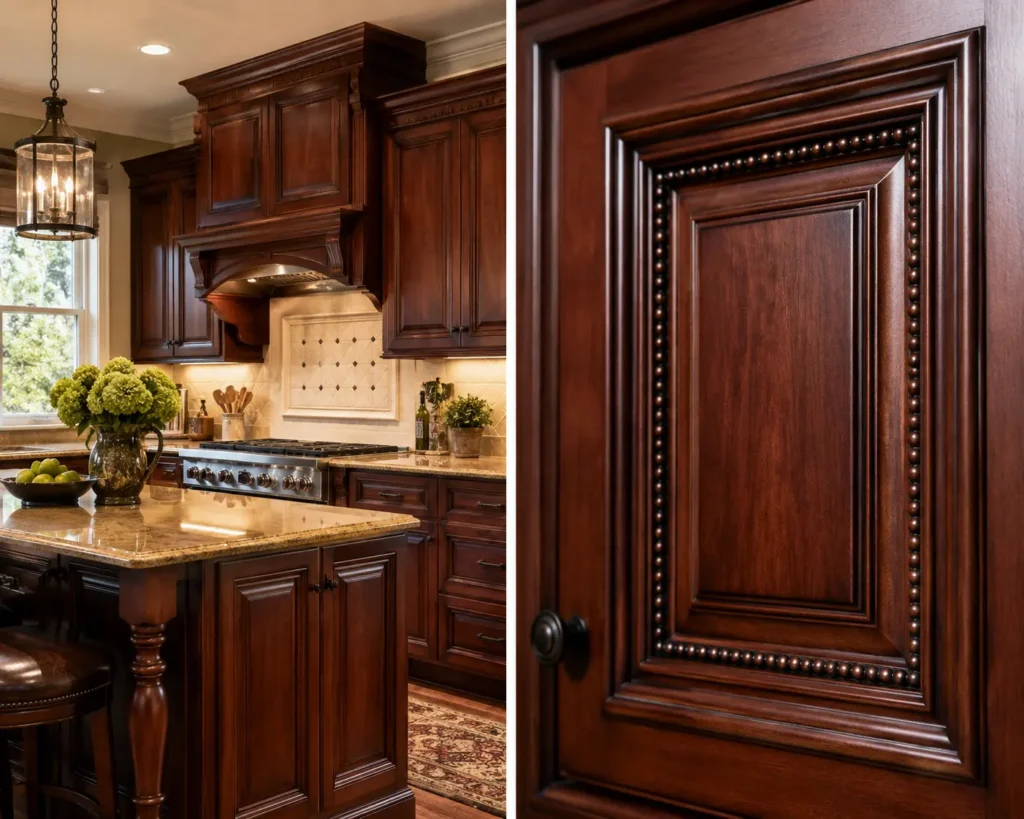
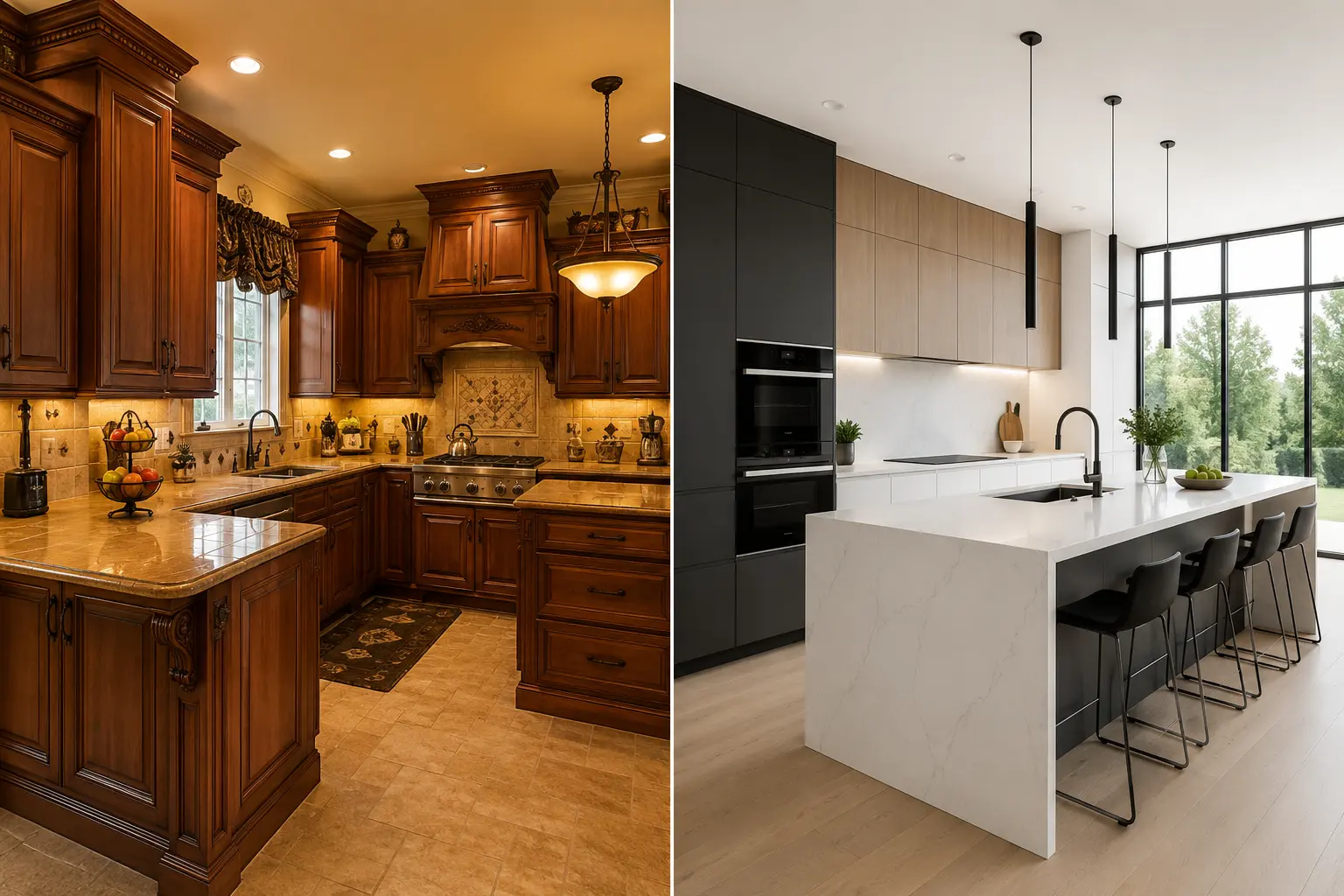
Colonical & Traditional Homes

Architectural characteristics: Symmetrical facades, multi-pane windows, pitched roofs, detailed molding, wood accents, classic proportions.

Colonial homes are the most common style across Eastern Massachusetts, and they call for cabinets with warmth, detail, and craftsmanship.

Best cabinet styles:

  • Raised Panel Cabinets are the gold standard for Colonial and traditional homes. The center panel is raised slightly above the frame, creating dimension and shadow lines that echo the detailed millwork found elsewhere in these homes.
  • Beaded Inset Cabinets take it a step further. The doors sit flush inside the cabinet frame, with a small bead detail around the opening – a premium, furniture – grade look that pairs beautifully with New England craftsmanship.
What to avoid: Ultra-flat slab doors or high-gloss lacquer finishes. These feel jarring against traditional architectural details.
Finish tip: Ultra-flat slab doors or high-gloss lacquer finishes. These feel jarring against traditional architectural details.

2. Cape Cod Homes

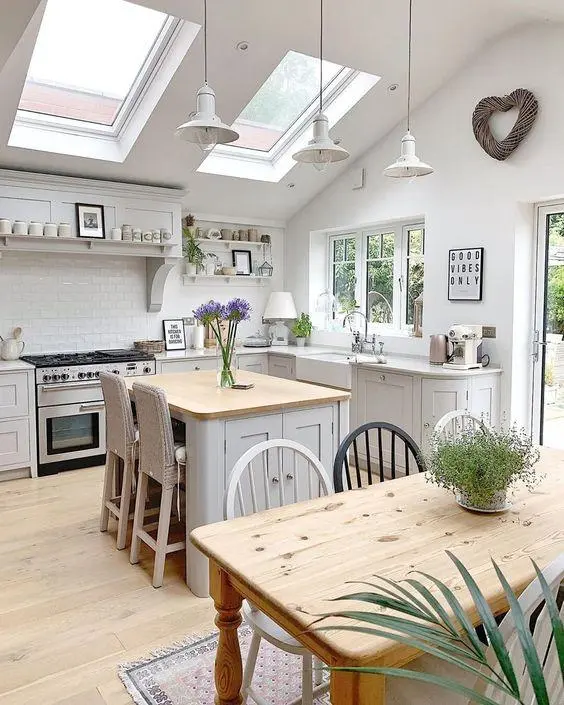
Cape & Cod Homes in Wimlington, MA
Architectural characteristics: Steeply pitched roofs, dormer windows, low ceilings, simple and modest proportions, cozy feel.

Cape Cods are beloved across Massachusetts – and their kitchens come with some unique challenges, particularly low or sloped ceilings and often tighter floor plans.

Best cabinet styles:

  • Shaker Cabinets are the near-perfect match for Cape Cods. The shaker style – a five-piece door with a flat center panel and clean square edges – balances detail and simplicity without adding visual weight to already-cozy spaces.
  • Simple Raised Panel in a modest profile also works well, particularly in larger Cape kitchens.
What to avoid: Very ornate or heavily detailed cabinet doors, which can overwhelm modest proportions. Avoid very tall upper cabinets if ceiling height is limited.
Finish tip: Soft whites, warm grays, sage greens, and creamy off-whites reinforce the relaxed, comfortable feel Cape Cods are known for.

3. Craftsman and Bungalow Homes

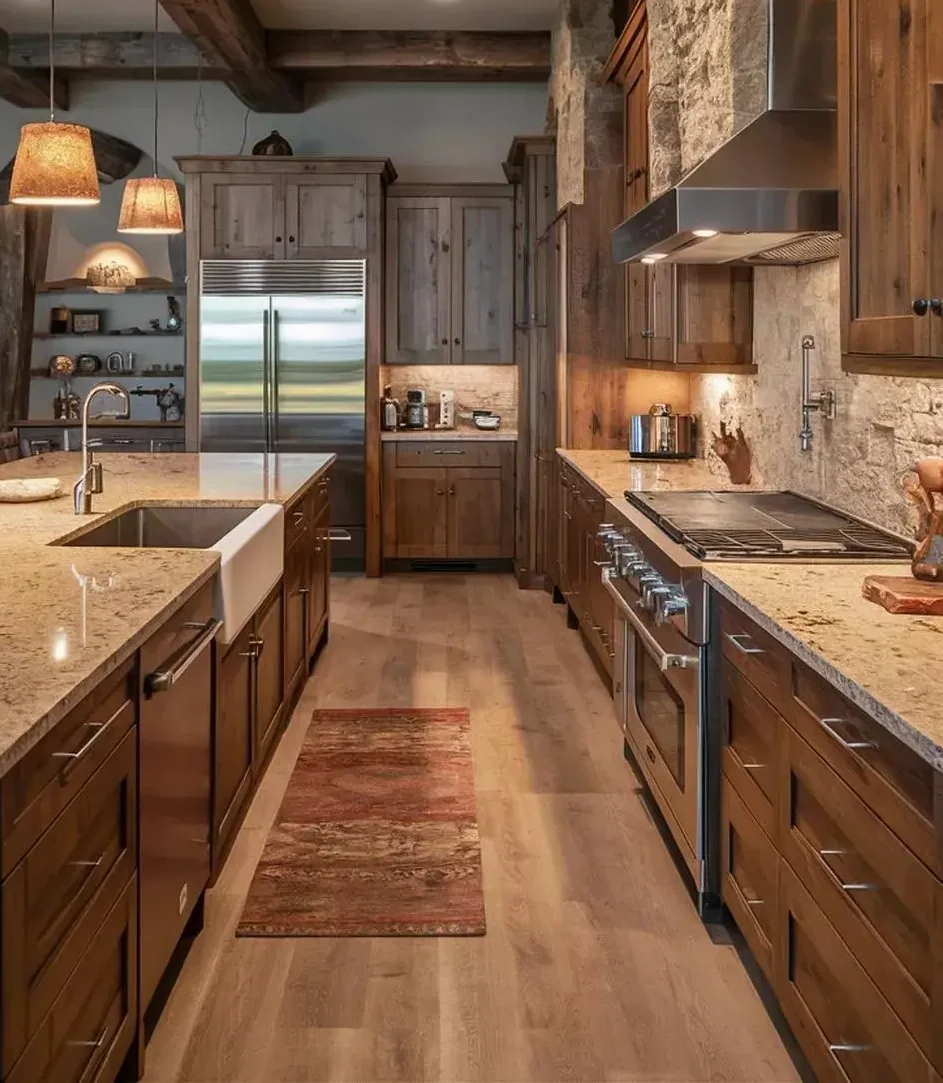
Craftman &Bungalow Homaes
Architectural characteristics: Low-pitched roofs with wide eaves, exposed rafters or beams, front porches, natural materials, horizontal lines, emphasis on handcraft.
Craftsman homes celebrate honest materials and careful joinery. Your cabinet choices should feel like they were made by hand with intention.

Best cabinet styles:

  • Shaker Cabinets in natural wood tones hit the Craftsman sweet spot – the movement actually heavily influenced the shaker aesthetic. Look for walnut, oak, or hickory stains rather than painted finishes.
  • Open shelving in select areas is a hallmark of Craftsman kitchens – great for display and a strong architectural nod.
What to avoid: Highly polished finishes, ornate European-style cabinetry, or anything that reads as sleek and machine-made. Craftsman architecture is about warmth and human scale.
Finish tip: Natural wood stains, forest greens, warm terracottas, and earthy neutrals. Hardware in oil-rubbed bronze or matte black anchors the handcrafted look.

4. Contemporary and Modern Homes

Architectural characteristics: Clean lines, flat or low-pitched roofs, large windows, open floor plans, minimal ornamentation, industrial or mixed materials.

Modern homes give you the most latitude – and the most rope to hang yourself with. The absence of detail is itself a design choice, and your cabinets need to honor that restraint.

Best cabinet styles:

  • Flat-Panel (Slab) Cabinets are the definitive modern kitchen cabinet. No frames, no raised centers, no profiles – just a clean, flush face that lets countertops and backsplashes do the visual talking.
  • Full-Overlay Frameless Cabinets (European-style) eliminate the face frame entirely for a seamless, built-in look that feels architectural rather than decorative.
What to avoid: Raised panel cabinets with heavy detail, traditional crown molding, or rustic distressed finishes. These clash with modern architecture just as flat panels clash with Colonials.
Finish tip: High-gloss whites, matte charcoals, two-tone combinations (dark lowers, light uppers), and wood-look or concrete laminates. Integrated hardware or long bar pulls in brushed nickel or matte black complete the look.

5. Ranch and Mid-Century Homes

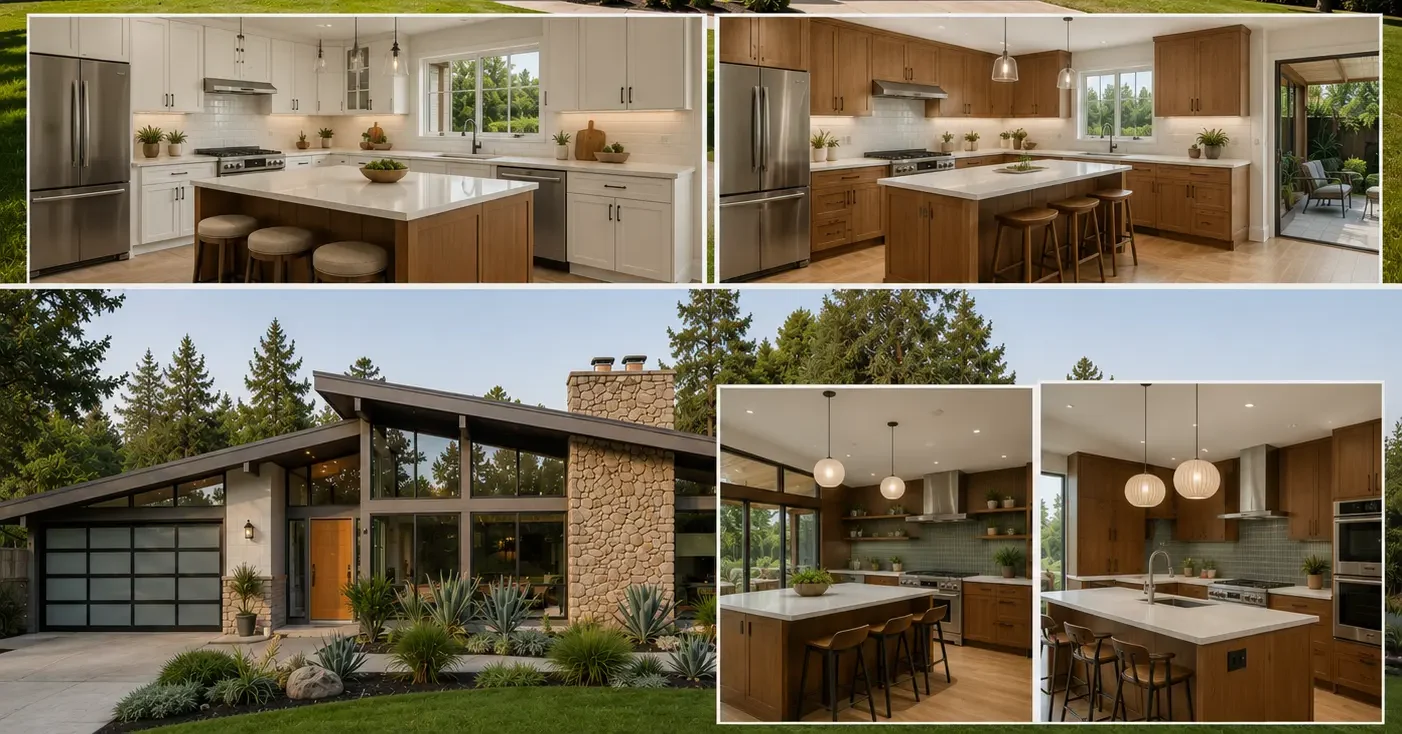
Ranch and Mild Century Homes
Architectural characteristics: Single-story, horizontal emphasis, low rooflines, large windows, connection between indoor and outdoor spaces, functional simplicity.
Mid-century and ranch homes are having a major moment, and their kitchens offer a wonderful opportunity to lean into that aesthetic or update it thoughtfully.

Best cabinet styles:

  • Flat-Panel Cabinets with Warm Wood Accents hit the mid-century sweet spot – walnut-stained lowers with white uppers, or a mix of painted and natural wood-look finishes.
  • Simple Shaker is also a safe and versatile choice for ranch homes wanting a timeless, updated look without committing fully to retro style.
Finish tip: Warm whites, walnut tones, and terracotta accents. Brass or gold hardware adds a period-appropriate touch.

Beyond Style: Other Factors That Guide Your Cabinet Choice

Once you’ve aligned your cabinet style to your architecture, a few other factors help narrow it down further.
Layout and Kitchen Size: Smaller kitchens benefit from lighter colors, minimal ornamentation, and full-overlay doors that maximize visual space. Larger kitchens can support two-tone finishes, glass-front uppers, open shelving sections, or contrasting island cabinets.
Your Personal Lifestyle: Families with young kids may prefer durable, easy-to-clean finishes in satin or semi-gloss. Households that cook heavily should consider practical storage configurations alongside aesthetics.
Longevity vs. Trends: If you’re remodeling for the long term (10 – 15+ years), lean toward timeless styles like shaker or raised panel in neutral palettes. If you’re remodeling to sell within 3 – 5 years, current buyer preferences matter more.
Budget: Cabinet style affects price. Inset cabinets typically cost 15–30% more than overlay options. Shaker cabinets offer the best balance of style, durability, and accessible price points across most budget ranges.

How HSH Design Inc. Helps Wilmington MA Homeowners Choose

At our design center on Main Street in Wilmington, we carry cabinet lines across every style category discussed in this guide – including Bertch, Dover Woods, Strasser, Tribeca, 802 Cabinetry, and more. Each line offers different door profiles, finishes, and price points so we can find the right fit for your home and budget.
When you visit our showroom, our team starts by asking about your home – not just what you like on Pinterest. Understanding your architecture, your existing trim details, your flooring, and your lifestyle helps us steer you toward cabinets that will look like they belong, not like they were imported from a different house.
We also work alongside GJ Miller & Sons Inc., our sister company with 30+ years of renovation experience, which means we can take your cabinet selection all the way through design, material sourcing, and installation – under one roof.

Frequently Asked Questions

Can I mix cabinet styles in the same kitchen?

Yes, strategically. A popular approach is using one style for perimeter cabinets and a contrasting style or finish for the island. The key is keeping the variation intentional – different color, same door profile, or different profile in a clearly defined zone.

Yes. Kitchens are among the highest-ROI renovation investments, and dated or mismatched cabinetry is one of the first things buyers notice. Timeless styles (shaker, raised panel) in neutral finishes tend to appeal to the broadest buyer pool in the Massachusetts market.

Lead times vary by manufacturer and style, typically ranging from 4 – 12 weeks for semi-custom cabinets. Our team will walk you through realistic timelines during your consultation.

Bring photos – of your exterior, your interior trim, your windows, and your existing kitchen – to your consultation. Our design team is experienced at identifying style cues and recommending cabinets that fit.

Ready to Find the Right Cabinet Style for Your Home?

Choosing kitchen cabinets is one of the most impactful decisions in any remodel – and it doesn’t have to be overwhelming. With the right framework (start with your architecture, then filter by lifestyle and budget), you can move confidently toward a kitchen that feels cohesive, beautiful, and built to last.
HSH Design Inc. serves homeowners across Wilmington, Burlington, Woburn, Billerica, and the greater Merrimack Valley. Visit our showroom at 442 Main Street, Wilmington, MA or call us at (978) 375-7685 to book your complimentary design consultation.
Visit our showroom, give us a call, or drop us an email to get started. We’d love to help you build a kitchen you’ll love for years to come.

Visit HSH Design Inc.

HSH Design Inc.
442 Main Street, Wilmington, MA 01887
📞 (978) 375-7685
✉ janet@hshdesigninc.com

Mon–Thu: 10 AM–5 PM | Fri: 10 AM–3 PM | Sat: By Appointment

Products and Services

How can we help you?

Scroll to Top