What Is Millwork?
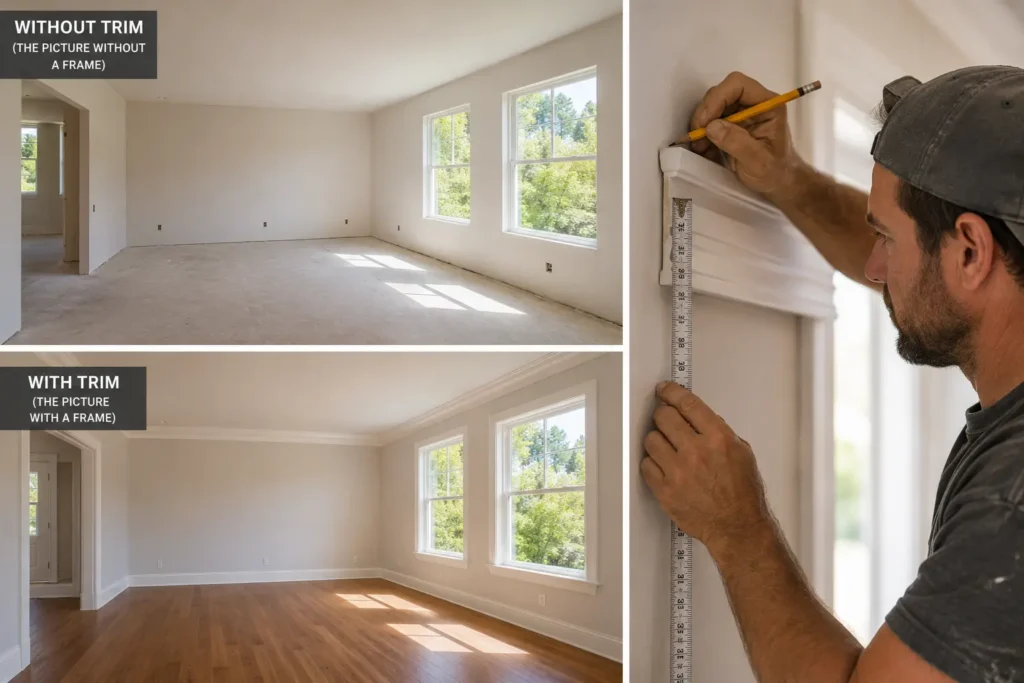
What Is Millwork? A Homeowner’s Guide to Trim, Molding, and Built-Ins You’ve probably heard the word “millwork” tossed around during a renovation conversation or spotted it on a design website. But unless you work in construction or interior design, it’s one of those terms that sounds important without being entirely clear.Here’s the short answer: millwork is the custom woodwork that gives a home its character. It’s the crown molding that makes a ceiling feel finished. The built-in bookshelves that turn a wall into a focal point. The window casing that frames a view. The wainscoting that adds elegance to a dining room. Without it, even the most beautifully furnished home can feel unfinished – like a picture without a frame. At HSH Design Inc. in Wilmington, MA, millwork is a core part of how we bring thoughtful detail and long-term function to every remodeling project. Whether you’re renovating a kitchen in Burlington, updating a bathroom in Reading, or doing a full home makeover in Andover, understanding millwork will help you make smarter decisions and get more from your renovation budget. This guide covers everything a Massachusetts homeowner needs to know: what millwork is, the different types, how it’s used in real projects, how much it costs, and how to choose the right millwork for your home. What Exactly Is Millwork? The word “millwork” originally referred to wood products manufactured at a lumber mill – as opposed to timber cut on-site. Today, the term covers a broad category of custom and semi-custom wood components that are fabricated to specific dimensions and installed as part of a home’s architecture.The key distinction is that millwork is built into the structure of the home, not placed in it. A bookcase you buy at a furniture store is furniture. A built-in bookcase with custom shelving, integrated lighting, and a matching base cabinet that’s anchored to the wall and finished with trim that matches your baseboard – that’s millwork.Millwork includes both architectural millwork (trim, molding, casing, wainscoting – elements that define the shape and detail of rooms) and functional millwork (built-in storage, cabinetry, shelving, and furniture-style pieces that are part of the room’s layout). Types of Millwork: A Complete Breakdown Understanding the different categories of millwork helps you have more informed conversations with your designer and contractor – and helps you spot opportunities to add value in your home. 1. Trim and Baseboard Trim is the most common form of millwork and is found in virtually every home. It includes the strips of wood that run along the base of walls (baseboard), around door frames (casing), and along the top of walls where they meet the ceiling (crown molding). Trim serves two purposes: it covers the gaps between surfaces (where the drywall meets the floor, for example) and it adds decorative detail that elevates a room’s finish level.Trim profiles range from simple and modern (a flat 3-inch baseboard with a square edge) to highly detailed and traditional (layered base with a shoe molding, cap, and decorative profile). The right choice depends on your home’s architecture – a Cape Cod in North Reading calls for something very different than a contemporary new build in Lexington. 2. Crown Molding Crown molding is the decorative trim installed at the junction of walls and ceilings. It’s one of the single most impactful millwork additions you can make to a room – it draws the eye upward, adds perceived height, and gives a finished, architectural quality to spaces that feel incomplete without it.Crown molding ranges from a simple single-piece profile to elaborate multi-layer assemblies stacked to create a dramatic cornice effect. In kitchens, crown molding is commonly added to the tops of upper cabinets to give them a built-in, custom appearance – one of the most popular millwork upgrades we install at HSH Design Inc. 3. Wainscoting and Wall Paneling Wainscoting refers to decorative wood paneling applied to the lower portion of a wall, typically from floor to chair-rail height (about 32-36 inches). It adds depth, texture, and a sense of quality to dining rooms, entryways, hallways, and bathrooms. Common wainscoting styles include: Raised panel: Traditional and formal; panels are slightly raised from the frame. Ideal for Colonial and traditional New England homes. Flat panel (recessed): Clean and modern; panels sit behind the frame. Works beautifully in contemporary and transitional homes. Beadboard: Vertical planks with a narrow groove between them. Cottage, farmhouse, and Cape Cod styles. Board and batten: Alternating wide boards and narrow strips; popular in modern farmhouse and transitional designs. 4. Window and Door Casing Casing is the trim that surrounds windows and doors on the interior side. It covers the gap between the frame and the drywall and plays a major role in establishing the design character of a room. A simple 2.5-inch colonial casing with a back band reads as traditional. A flat, minimal casing with tight reveals reads as contemporary.One often-overlooked detail: when all your casing, baseboard, and crown molding share the same profile family or finish, the room achieves a cohesive, designed-from-scratch quality that adds real perceived value – and real appraised value – to your home. 5. Built-In Shelving and Storage Built-ins are the most functional category of millwork, and also among the most valuable. A well-designed built-in bookcase, entertainment center, mudroom locker system, or window seat with storage adds square footage of usable storage space while looking like a permanent, intentional part of the home’s architecture. Built-ins also dramatically increase perceived home value. Real estate agents consistently report that buyers react more positively to homes with custom built-ins than to those without – even when the underlying square footage is identical. In the competitive Massachusetts real estate market, from Wilmington to Winchester to Woburn, built-ins are a reliable investment. 6. Stair Parts and Railings Staircases involve a significant amount of millwork: the newel posts (the large vertical posts at the top and bottom of a staircase), balusters (the vertical spindles between the rail and the tread), handrails, and the treads and risers