Blog

Your blog category

Trim vs Without Trim
Blog

What Is Millwork?

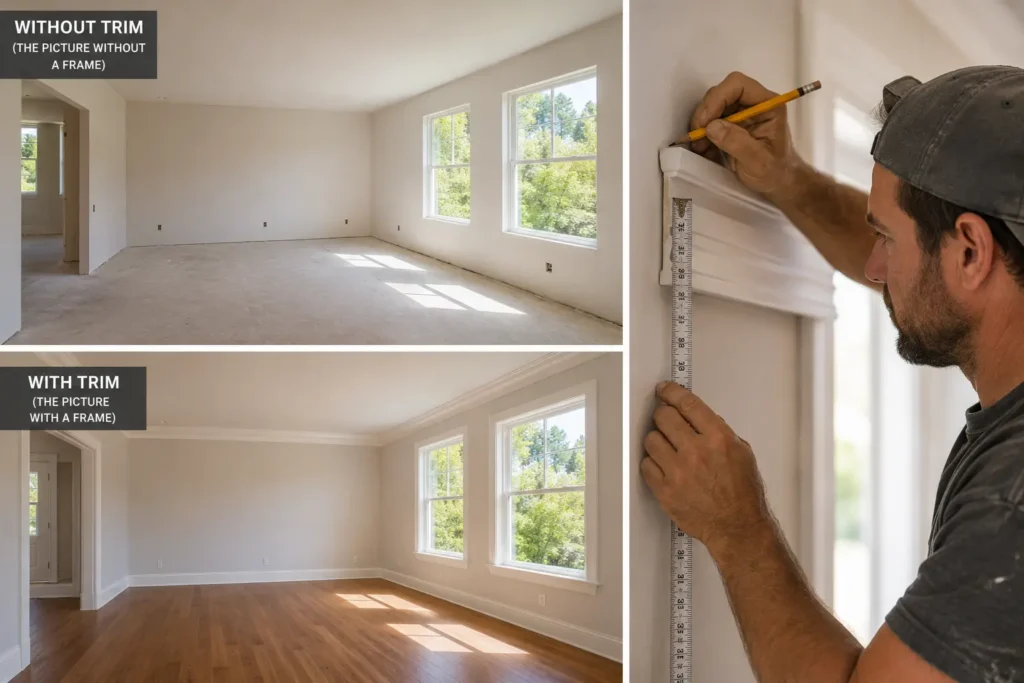
What Is Millwork? A Homeowner’s Guide to Trim, Molding, and Built-Ins You’ve probably heard the word “millwork” tossed around during a renovation conversation or spotted it on a design website. But unless you work in construction or interior design, it’s one of those terms that sounds important without being entirely clear.Here’s the short answer: millwork is the custom woodwork that gives a home its character. It’s the crown molding that makes a ceiling feel finished. The built-in bookshelves that turn a wall into a focal point. The window casing that frames a view. The wainscoting that adds elegance to a dining room. Without it, even the most beautifully furnished home can feel unfinished – like a picture without a frame. At HSH Design Inc. in Wilmington, MA, millwork is a core part of how we bring thoughtful detail and long-term function to every remodeling project. Whether you’re renovating a kitchen in Burlington, updating a bathroom in Reading, or doing a full home makeover in Andover, understanding millwork will help you make smarter decisions and get more from your renovation budget. This guide covers everything a Massachusetts homeowner needs to know: what millwork is, the different types, how it’s used in real projects, how much it costs, and how to choose the right millwork for your home. What Exactly Is Millwork? The word “millwork” originally referred to wood products manufactured at a lumber mill – as opposed to timber cut on-site. Today, the term covers a broad category of custom and semi-custom wood components that are fabricated to specific dimensions and installed as part of a home’s architecture.The key distinction is that millwork is built into the structure of the home, not placed in it. A bookcase you buy at a furniture store is furniture. A built-in bookcase with custom shelving, integrated lighting, and a matching base cabinet that’s anchored to the wall and finished with trim that matches your baseboard – that’s millwork.Millwork includes both architectural millwork (trim, molding, casing, wainscoting – elements that define the shape and detail of rooms) and functional millwork (built-in storage, cabinetry, shelving, and furniture-style pieces that are part of the room’s layout). Types of Millwork: A Complete Breakdown Understanding the different categories of millwork helps you have more informed conversations with your designer and contractor – and helps you spot opportunities to add value in your home. 1. Trim and Baseboard Trim is the most common form of millwork and is found in virtually every home. It includes the strips of wood that run along the base of walls (baseboard), around door frames (casing), and along the top of walls where they meet the ceiling (crown molding). Trim serves two purposes: it covers the gaps between surfaces (where the drywall meets the floor, for example) and it adds decorative detail that elevates a room’s finish level.Trim profiles range from simple and modern (a flat 3-inch baseboard with a square edge) to highly detailed and traditional (layered base with a shoe molding, cap, and decorative profile). The right choice depends on your home’s architecture – a Cape Cod in North Reading calls for something very different than a contemporary new build in Lexington. 2. Crown Molding Crown molding is the decorative trim installed at the junction of walls and ceilings. It’s one of the single most impactful millwork additions you can make to a room – it draws the eye upward, adds perceived height, and gives a finished, architectural quality to spaces that feel incomplete without it.Crown molding ranges from a simple single-piece profile to elaborate multi-layer assemblies stacked to create a dramatic cornice effect. In kitchens, crown molding is commonly added to the tops of upper cabinets to give them a built-in, custom appearance – one of the most popular millwork upgrades we install at HSH Design Inc. 3. Wainscoting and Wall Paneling Wainscoting refers to decorative wood paneling applied to the lower portion of a wall, typically from floor to chair-rail height (about 32-36 inches). It adds depth, texture, and a sense of quality to dining rooms, entryways, hallways, and bathrooms. Common wainscoting styles include: Raised panel: Traditional and formal; panels are slightly raised from the frame. Ideal for Colonial and traditional New England homes. Flat panel (recessed): Clean and modern; panels sit behind the frame. Works beautifully in contemporary and transitional homes. Beadboard: Vertical planks with a narrow groove between them. Cottage, farmhouse, and Cape Cod styles. Board and batten: Alternating wide boards and narrow strips; popular in modern farmhouse and transitional designs. 4. Window and Door Casing Casing is the trim that surrounds windows and doors on the interior side. It covers the gap between the frame and the drywall and plays a major role in establishing the design character of a room. A simple 2.5-inch colonial casing with a back band reads as traditional. A flat, minimal casing with tight reveals reads as contemporary.One often-overlooked detail: when all your casing, baseboard, and crown molding share the same profile family or finish, the room achieves a cohesive, designed-from-scratch quality that adds real perceived value – and real appraised value – to your home. 5. Built-In Shelving and Storage Built-ins are the most functional category of millwork, and also among the most valuable. A well-designed built-in bookcase, entertainment center, mudroom locker system, or window seat with storage adds square footage of usable storage space while looking like a permanent, intentional part of the home’s architecture. Built-ins also dramatically increase perceived home value. Real estate agents consistently report that buyers react more positively to homes with custom built-ins than to those without – even when the underlying square footage is identical. In the competitive Massachusetts real estate market, from Wilmington to Winchester to Woburn, built-ins are a reliable investment. 6. Stair Parts and Railings Staircases involve a significant amount of millwork: the newel posts (the large vertical posts at the top and bottom of a staircase), balusters (the vertical spindles between the rail and the tread), handrails, and the treads and risers
Kitchen Cabinet Styles in Wimlington, MA
Blog

Kitchen Cabinet Styles

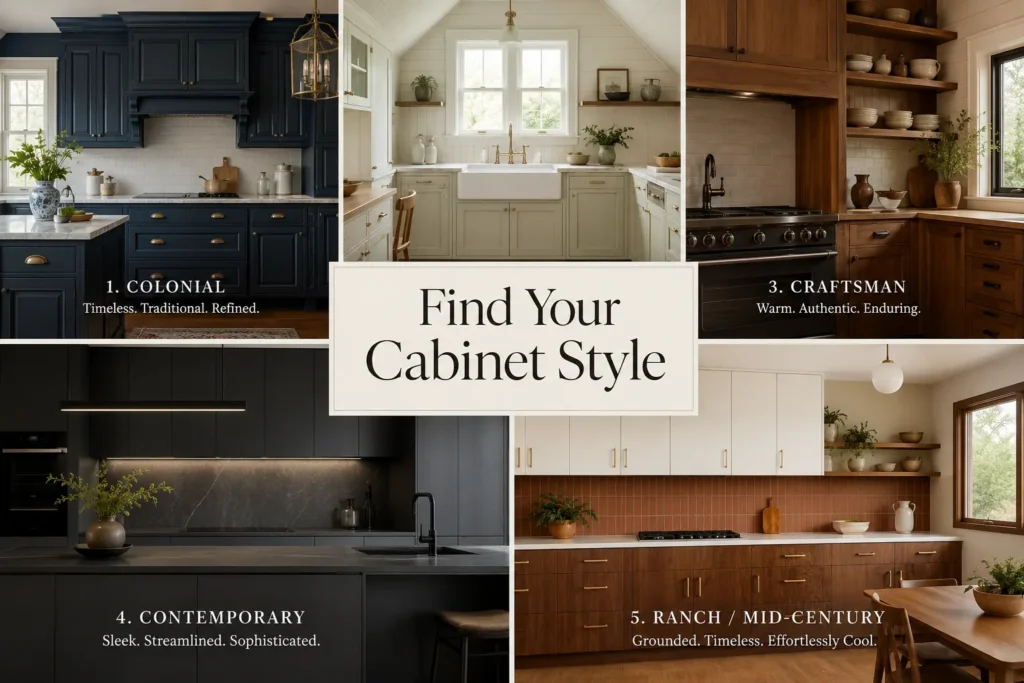
How to Choose the Right Kitchen Cabinet Style for Your Home’s Architecture You’ve finally decided to remodel your kitchen. You’ve got a budget, a vision, and maybe even a Pinterest board with 47 saved photos. But when it comes to actually choosing your kitchen cabinet style, things get complicated fast.This guide covers practical, high-impact small bathroom remodel ideas that homeowners, renters upgrading their space, and property investors can implement right now. No structural engineering required. Floor space is the most precious commodity in a small bathroom. The moment you add a freestanding storage unit, a laundry basket, or a bulky vanity, you reduce the visual footprint and make the room feel cramped. The solution is to think vertically and recessed. Should you go with shaker cabinets? Flat-front? Raised panel? Inset? And how does your home’s architecture play into it? Here’s the truth most homeowners don’t hear until it’s too late: The “best” kitchen cabinet style isn’t just about what looks pretty – it’s about what fits your home. Choosing a sleek, ultra-modern flat-panel cabinet for a classic Colonial will feel off. So will heavy ornate cabinetry in a contemporary open-plan home.At HSH Design Inc. in Wilmington, MA, we help Massachusetts homeowners navigate this exact decision every day. This guide walks you through how to match kitchen cabinet styles to your home’s architecture – so your renovation feels cohesive, adds real value, and looks intentional rather than accidental. Why Your Home’s Architecture Matters When Choosing Cabinets Think of your home’s architecture as the story it’s already telling. The rooflines, trim details, window shapes, and exterior style all set a visual tone. Your interior – especially your kitchen – should feel like a continuation of that story, not a contradiction of it.When cabinet style clashes with architecture, even a technically well-executed kitchen can feel somehow “wrong” without the homeowner being able to pinpoint why. When they align, everything clicks into place naturally.This doesn’t mean you’re locked in with zero flexibility. But it does mean starting with your home’s style and working forward from there – rather than falling in love with a cabinet door profile first and trying to reverse-engineer a justification. Common New England Home Styles and the Cabinet Styles That Fit Them Massachusetts has a wonderfully diverse architectural landscape – from centuries-old Colonials to mid-century ranches to modern new builds. Here’s how to match cabinets to the most common styles you’ll find across the Wilmington, Burlington, and greater Merrimack Valley area. 1. Colonial and Traditional Homes Architectural characteristics: Symmetrical facades, multi-pane windows, pitched roofs, detailed molding, wood accents, classic proportions. Colonial homes are the most common style across Eastern Massachusetts, and they call for cabinets with warmth, detail, and craftsmanship. Best cabinet styles: Raised Panel Cabinets are the gold standard for Colonial and traditional homes. The center panel is raised slightly above the frame, creating dimension and shadow lines that echo the detailed millwork found elsewhere in these homes. Beaded Inset Cabinets take it a step further. The doors sit flush inside the cabinet frame, with a small bead detail around the opening – a premium, furniture – grade look that pairs beautifully with New England craftsmanship. What to avoid: Ultra-flat slab doors or high-gloss lacquer finishes. These feel jarring against traditional architectural details.Finish tip: Ultra-flat slab doors or high-gloss lacquer finishes. These feel jarring against traditional architectural details. 2. Cape Cod Homes Architectural characteristics: Steeply pitched roofs, dormer windows, low ceilings, simple and modest proportions, cozy feel. Cape Cods are beloved across Massachusetts – and their kitchens come with some unique challenges, particularly low or sloped ceilings and often tighter floor plans. Best cabinet styles: Shaker Cabinets are the near-perfect match for Cape Cods. The shaker style – a five-piece door with a flat center panel and clean square edges – balances detail and simplicity without adding visual weight to already-cozy spaces. Simple Raised Panel in a modest profile also works well, particularly in larger Cape kitchens. What to avoid: Very ornate or heavily detailed cabinet doors, which can overwhelm modest proportions. Avoid very tall upper cabinets if ceiling height is limited.Finish tip: Soft whites, warm grays, sage greens, and creamy off-whites reinforce the relaxed, comfortable feel Cape Cods are known for. 3. Craftsman and Bungalow Homes Architectural characteristics: Low-pitched roofs with wide eaves, exposed rafters or beams, front porches, natural materials, horizontal lines, emphasis on handcraft.Craftsman homes celebrate honest materials and careful joinery. Your cabinet choices should feel like they were made by hand with intention. Best cabinet styles: Shaker Cabinets in natural wood tones hit the Craftsman sweet spot – the movement actually heavily influenced the shaker aesthetic. Look for walnut, oak, or hickory stains rather than painted finishes. Open shelving in select areas is a hallmark of Craftsman kitchens – great for display and a strong architectural nod. What to avoid: Highly polished finishes, ornate European-style cabinetry, or anything that reads as sleek and machine-made. Craftsman architecture is about warmth and human scale.Finish tip: Natural wood stains, forest greens, warm terracottas, and earthy neutrals. Hardware in oil-rubbed bronze or matte black anchors the handcrafted look. 4. Contemporary and Modern Homes Architectural characteristics: Clean lines, flat or low-pitched roofs, large windows, open floor plans, minimal ornamentation, industrial or mixed materials. Modern homes give you the most latitude – and the most rope to hang yourself with. The absence of detail is itself a design choice, and your cabinets need to honor that restraint. Best cabinet styles: Flat-Panel (Slab) Cabinets are the definitive modern kitchen cabinet. No frames, no raised centers, no profiles – just a clean, flush face that lets countertops and backsplashes do the visual talking. Full-Overlay Frameless Cabinets (European-style) eliminate the face frame entirely for a seamless, built-in look that feels architectural rather than decorative. What to avoid: Raised panel cabinets with heavy detail, traditional crown molding, or rustic distressed finishes. These clash with modern architecture just as flat panels clash with Colonials.Finish tip: High-gloss whites, matte charcoals, two-tone combinations (dark lowers, light uppers),

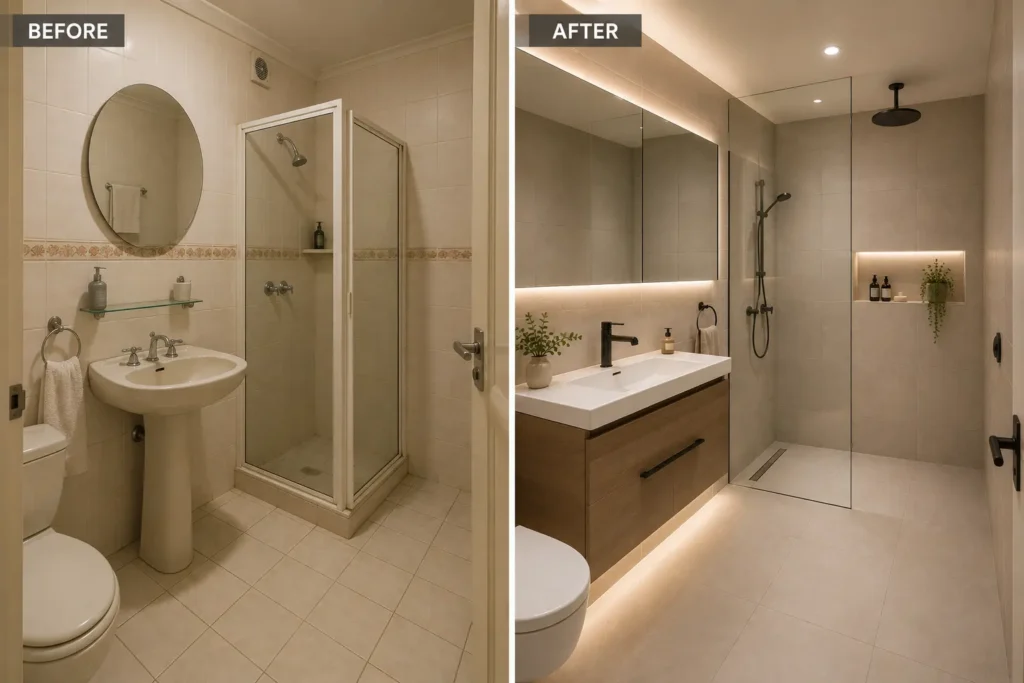
Before After Bathroom Remodel
Blog

Small Bathroom Remodel Ideas That Maximise Space Without Moving Walls

Small Bathroom Remodel Ideas That Maximise Space Without Moving Walls A small bathroom does not have to feel like a cupboard with a tap. Whether you are dealing with a 35-square-foot powder room or a compact suite, the right remodel can make the space feel twice as large – without knocking down a single wall, hiring a plumber to reroute pipes, or blowing your budget on structural work. The secret lies in smart design choices: what you put on the walls, where you store things, how light moves through the room, and which fixtures you choose.This guide covers practical, high-impact small bathroom remodel ideas that homeowners, renters upgrading their space, and property investors can implement right now. No structural engineering required. 1. Go Vertical: Clever Storage That Does Not Eat Floor Space Floor space is the most precious commodity in a small bathroom. The moment you add a freestanding storage unit, a laundry basket, or a bulky vanity, you reduce the visual footprint and make the room feel cramped. The solution is to think vertically and recessed.Floating vanities are one of the single best investments you can make in a small bathroom remodel. By mounting the cabinet off the floor, you expose the floor beneath it – which tricks the eye into reading the room as larger. A floating vanity with two deep drawers gives you more usable storage than a pedestal sink with a basket shoved underneath, and it keeps the floor clear for mopping.Tall slim cabinets that run floor to ceiling maximise the dead zone above head height. A 20-25 cm deep cabinet beside the toilet or in a corner can hold towels, cleaning products, and spare toiletries in a footprint smaller than a standard bath towel. Pair this with a mirrored cabinet above the sink for a double layer of storage that adds depth rather than bulk. Tall slim cabinets that run floor to ceiling maximise the dead zone above head height. A 20-25 cm deep cabinet beside the toilet or in a corner can hold towels, cleaning products, and spare toiletries in a footprint smaller than a standard bath towel. Pair this with a mirrored cabinet above the sink for a double layer of storage that adds depth rather than bulk. Pro tip: Replace an open shelf beside the basin with a slim recessed medicine cabinet. You regain 10–15 cm of projection space and gain a mirror at the same time. 2. Mirrors and Lighting: The Fastest Way to Double a Room If there is one design tool that delivers the biggest return on a small bathroom remodel, it is mirror placement. A full-width mirror – running the entire length of the vanity wall – creates an illusion of a room that is twice as wide. It reflects light, bounces colour, and gives the eye a vanishing point that does not exist in a narrow space.Large-format mirrors that reach from counter height to the ceiling are particularly effective in bathrooms with low ceilings. By drawing the eye upward, they add perceived height. If your bathroom has an awkward alcove or an unused wall, consider covering it with a frameless mirror panel – the wall appears to dissolve, and the room feels open.Lighting is the other half of this equation. Most small bathrooms rely on a single overhead bulb, which creates unflattering shadows and makes the room feel dim and enclosed. Layered lighting – a combination of overhead, task, and accent sources – transforms the atmosphere.Choose warm-white bulbs (2700–3000 K) rather than cool-white for an inviting, spa-like feel. Cool lighting in a small space can feel clinical and harsh, which subconsciously makes the room feel less comfortable and therefore smaller. 3. Space-Smart Fixtures and Fittings That Work Harder The fixtures you choose determine more than aesthetics – they define how the room functions and how much space you have left over for movement. In a small bathroom remodel, every centimetre matters, and the right product choices can reclaim surprising amounts of floor and wall space. Toilets Wall-hung (back-to-wall) toilets are a game-changer in compact bathrooms. Because the cistern is concealed inside the wall cavity, you save 15-20 cm of floor depth compared with a standard close-coupled suite. That is enough extra clearance to walk comfortably past, or to fit a slightly wider vanity. Compact close-coupled toilets – sometimes called short-projection suites – are a more budget-friendly alternative, projecting as little as 60 cm from the wall. Basins Corner basins use a triangular footprint to fit into an otherwise wasted corner. Cloakroom basins – the narrow units designed for under-stair WCs – can work beautifully in a small en suite when paired with a generous mirror and good lighting. Wall-mounted basins with a bottle trap (rather than a pedestal or cabinet) expose the floor completely, reinforcing the open feel. Shower Enclosures If your bathroom has a bath you rarely use, replacing it with a walk-in shower is the single most space-liberating change you can make – without moving a wall. A 900 × 900 mm shower tray in the same footprint as a standard bath end frees up 40-50% of the floor area. Frameless glass panels maintain sightlines across the full width of the room, whereas framed or semi-framed screens visually cut the space in half. If a full enclosure is not possible, a simple fixed glass screen on a wet-room-style level-access area achieves a similar open effect.Sliding or bifold shower doors are better than hinged doors wherever clearance is limited – a hinged door needs 700-800 mm of swing space in front of it, which in a small bathroom is often impossible to achieve. 4. Tiles, Colour, and Visual Tricks That Change Everything Surface treatment – tile choice, grout colour, and paint palette – is where many homeowners under-invest in a small bathroom remodel, yet it is one of the highest-leverage decisions you can make. The visual tricks here are well-established by interior designers and backed by the psychology of spatial perception. Large-Format Tiles Counter-intuitively, large

Kitchen Cabinets Before After
Blog

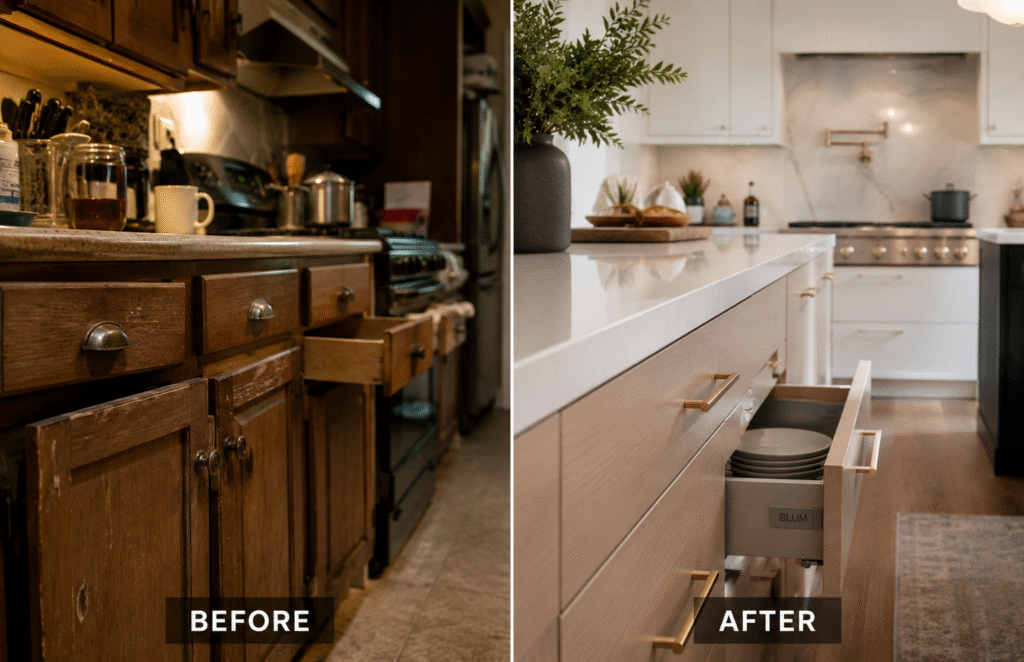
Best Cabinet Hardware for Kitchen Remodels: What Homeowners Should Know

Best Cabinet Hardware for Kitchen Remodels: What Homeowners Should Know Imagine finishing your dream kitchen remodel – new cabinets, beautiful countertops, stunning tile – only to find that the drawers stick, the cabinet doors won’t close quietly, and the pulls feel flimsy after just a few months of use. It’s one of the most common (and most avoidable) disappointments in kitchen renovation. When planning a kitchen remodel, most homeowners spend hours choosing cabinet colors, countertop materials, and appliances – and leave hardware as a last-minute afterthought. That’s a costly mistake. The quality of your hinges, drawer slides, and pulls directly affects how your kitchen functions every single day, and how long it holds up over years of real family use. At HSH Design Inc. in Wilmington, MA, we’ve helped hundreds of homeowners navigate this decision. Here’s everything you need to know before choosing cabinet hardware for your kitchen remodel. Why Cabinet Hardware Matters More Than You Think Cabinet hardware is one of the most heavily used elements in any kitchen. Every time you open a drawer or close a cabinet door, you’re interacting with your hardware. Over the course of a year, that adds up to thousands of interactions per component. Small quality differences – the kind that are hard to see in a showroom – become very noticeable very quickly. Even premium custom cabinets can feel cheap and disappointing when paired with low-quality hardware. A door that sags after two years, drawer slides that wobble under the weight of a cast iron pan, or pulls that lose their finish within a season – these are hardware failures, not cabinet failures. On the flip side, investing in quality hardware can elevate even a mid-range remodel into something that feels genuinely high-end every day. The right cabinet hardware improves daily kitchen workflow, reduces noise, extends the life of your cabinets, and makes your kitchen a more comfortable, organized space for your whole family. The Key Hardware Components to Get Right 1. Cabinet Hinges Hinges control how cabinet doors open, close, and stay aligned over time – and they’re one of the most common failure points in a kitchen remodel.  Low-quality hinges are the primary cause of cabinet doors that sag, swing open on their own, or develop a maddening squeak after a few years. Premium hinges include soft-close technology (which gently slows the door before it shuts, eliminating slamming), concealed installation for a cleaner look, and adjustable alignment systems so doors can be fine – tuned even after installation. For families with children, soft-close hinges are an especially worthwhile upgrade – they reduce wear on the cabinet box and cut down significantly on kitchen noise. 2. Drawer Slides Drawer slides may be the single most important hardware investment in a kitchen remodel. Kitchen drawers carry serious loads – cast iron cookware, full sets of dishware, pantry staples, heavy appliances – and inferior slides deteriorate quickly under that kind of regular stress. The two features that separate budget slides from quality ones are full-extension access and soft-close functionality. Full-extension slides allow the entire drawer to pull out completely, so you can see and reach everything stored at the back – a feature that dramatically improves kitchen organization and reduces the frustration of digging through crowded drawers. Soft-close functionality ensures drawers close gently and quietly every single time. These two features together make an enormous difference in how premium a kitchen feels during everyday use. 3. Knobs, Pulls, and Storage Systems Pulls and knobs define the visible style of your cabinetry. Bar pulls project a sleek, modern look; cup pulls work beautifully in farmhouse kitchens; traditional knobs suit classic and transitional styles; appliance pulls make a bold statement on pantry doors and large drawers. The style you choose should feel cohesive with your countertops, backsplash, and appliance finishes. Beyond the visible hardware, specialty storage systems are worth serious consideration. Pull-out trash and recycling units, spice pull-outs, deep drawer dividers, pantry pull-outs, and corner cabinet organizers all improve daily kitchen functionality and make the most of every inch of your storage space. How to Spot High-Quality Cabinet Hardware It can be difficult to evaluate hardware quality from a website photo or even a showroom display. Here are the clearest signs that separate premium hardware from lower-grade alternatives: Solid weight and feel – quality hardware feels substantial and balanced in your hand. Lightweight, hollow-feeling pieces typically indicate thinner materials or lower manufacturing standards. Smooth, quiet operation – open and close the sample several times. Premium hinges and drawer slides glide effortlessly without resistance, wobbling, or noise. Soft-close mechanisms should engage gently and consistently. Durable finish – the coating should feel uniform and resist scratching. Ask about the finish process: PVD (Physical Vapor Deposition) finishes are among the most durable available and far outlast painted or lacquered alternatives. Heavy-weight capacity – look for drawer slide ratings of at least 75–100 lbs. Premium systems engineered for real kitchen loads will outlast budget alternatives by many years. Warranty coverage – reputable hardware manufacturers stand behind their products with multi-year or lifetime warranties. A brand unwilling to offer a meaningful warranty is telling you something about how long they expect it to last. Which Cabinet Hardware Finish Should You Choose? Your finish choice affects both the look of your kitchen and how much maintenance it will require over years of daily use. Matte black is one of the most popular choices for modern and transitional kitchens. It creates strong visual contrast, complements both light and dark cabinetry, and hides fingerprints exceptionally well – a major advantage in a busy family kitchen. Brushed nickel is a timeless, versatile option that works with almost any kitchen style. Its subtle warm tone softens the look of stainless appliances and complements both white and wood-tone cabinetry. It’s also one of the most fingerprint-resistant finishes available. Satin brass has made a major comeback in luxury kitchen remodeling and continues to grow in popularity. It adds warmth and elegance without the high-maintenance shine of

Modern Bathroom Accessability
Blog

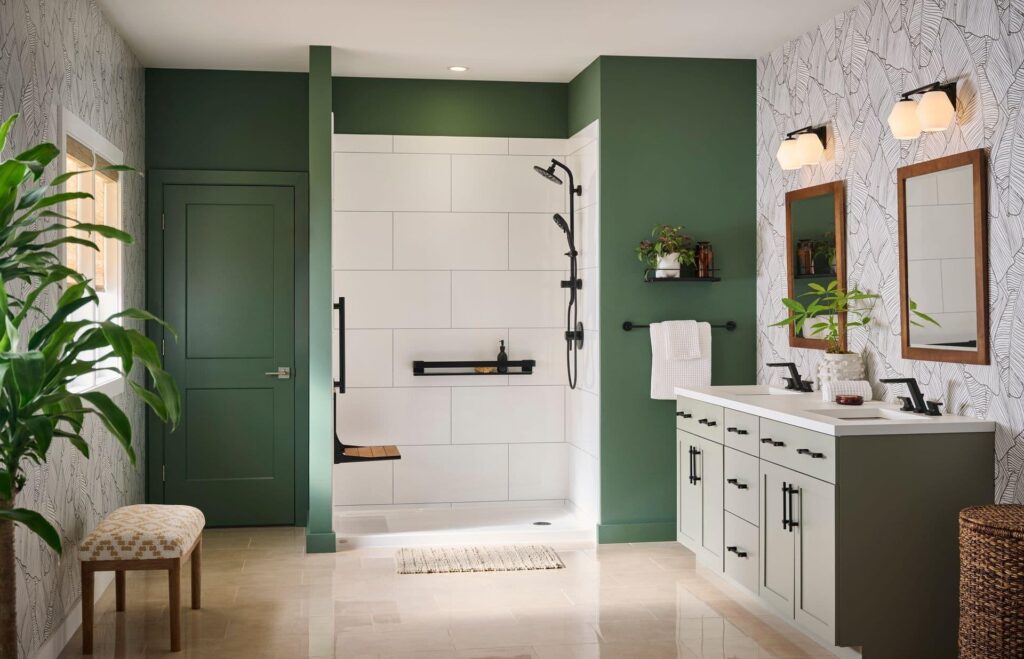
Bathroom Accessibility Without Sacrificing Style | Aging-in-Place Features You’ll Actually Want

Bathroom Accessibility Without Sacrificing Style: Aging-in-Place Features You’ll Actually Want For many homeowners, the phrase “accessible bathroom” still conjures the wrong image — a space that’s sterile, oversized, and stripped of personality. Something that solves a safety problem but kills the room’s beauty. That assumption is quietly costing people. because here’s the reality: the most beautifully designed bathrooms being built today — the ones that feel spa-like, modern, and high-end — are often the same bathrooms that work well across every stage of life. The design industry has noticed. 73% of NAHB industry leaders report that requests for aging-in-place features have significantly or somewhat increased over the last five years. These aren’t niche requests anymore. They’re what today’s homeowners actually want. Who This Is Really For Accessible design used to be framed as something you planned for when a crisis arrived. That framing is outdated.Today’s households are multigenerational. One bathroom might serve an older parent visiting for the week, a child learning to bathe independently, a homeowner recovering from knee surgery, and a couple planning to stay in their home for the next 30 years. Accessibility is about creating a bathroom that works for all of them — right now and later.Common reasons homeowners make these upgrades earlier than expected: Recovery from surgery or injury Making space more comfortable for an aging parent Addressing balance, knee, or back concerns Switch and dimmer placement for multi-circuit control Reducing the cost of a second renovation later Simply improving daily comfort for everyone in the home The National Institute on Aging recommends practical updates — good lighting, grab bars near the toilet and in the shower, and slip-resistant surfaces — as foundational steps toward a safer home environment. These don’t have to look like safety measures. They can look like design choices. 74% of homeownerssay they use lighting specifically to improve their physical and mental wellbeing — making it a wellness decision as much as a design one. Source: NKBA 2025 Kitchen Trends Report The Features Worth Knowing About The best aging-in-place bathrooms are the ones where functional details are integrated so naturally that they simply read as part of a well-thought-out remodel. Here are the elements that deliver the most value on both fronts. 1. Curbless Showers: Form and Function in the Same Move Few upgrades accomplish as much as a curbless shower. From a design standpoint, they make a bathroom feel larger, more open, and more contemporary. From a practical standpoint, they eliminate the step-over barrier that becomes increasingly difficult with age, mobility changes, or post-surgical recovery.NAHB identifies curbless showers as one of the most frequently requested aging-in-place features — and one of the most requested luxury features by homeowners in general. That’s not a coincidence.For contractors: slope, waterproofing, and layout decisions need to be made early. These choices affect the entire bathroom plan. 2. Grab Bars That Look Like They Belong The outdated image of a bulky chrome rail bolted to a tile wall has almost nothing to do with what grab bars look like today. Modern grab bars come in the same finishes as high-end plumbing fixtures — brushed nickel, matte black, polished chrome, unlacquered brass, and more. Selected as part of the hardware palette from the start, they read as intentional design accents, not retrofitted afterthoughts. National Institute on Aging recommends grab bars near toilets and in showers and tubs as one of the most effective ways to reduce fall risk at home. The design lesson here is simple: if they’re chosen from the beginning, they fit. If they’re added later, they often don’t. 3. Lighting That Actually Does Its Job This one is underestimated more than any other feature.Poor bathroom lighting creates shadows, flattens finishes, makes grooming harder, and increases the likelihood of missteps — especially during nighttime use. The National Institute on Aging includes good lighting as a core component of a safer home environment.Well-planned layered lighting — ambient, task at the vanity, and accent — makes a bathroom safer and more attractive simultaneously. It also makes tile, fixtures, and finishes look the way they were meant to look. Good lighting is one of the rare investments where accessibility and aesthetics point in exactly the same direction. 4. Non-Slip Flooring That Doesn’t Look Like It The fear that slip-resistant flooring has to look cheap or institutional is legitimate — but outdated. Today’s tile and stone options offer texture, grip, and visual sophistication at the same time. The goal is flooring that does four things well: looks elevated, holds up in wet conditions, instills confidence underfoot, and coordinates with the rest of the design. That’s not a compromise. That’s just good product selection. 5. Shower Benches, Handheld Sprays, and Thoughtful Layout Some of the most valuable features aren’t the most visible ones.A well-integrated shower bench adds comfort for bathing, shaving, or simply taking a moment. A handheld spray gives flexibility to different users and makes cleaning significantly easier. Carefully positioned niches, controls, and storage reduce awkward reaching and bending — which matters across every age group. For contractors: these details affect framing, plumbing, and tile layout. Decisions made early stay coherent. Decisions made late create compromises. 6. Vanity and Storage Design That Supports Daily Comfort Accessibility in the bathroom extends beyond the shower zone. The vanity area should be easy to move around, easy to keep organized, and easy to use without strain. That means considering counter height, storage accessibility, drawer and door hardware, and how the space works for someone who may be standing or seated. When these decisions are made as part of the original design rather than as a retrofit, the result feels intentional — and it looks like it. Why Early Planning Matters for Contractors and Homeowners Contractors already understand this intuitively: accessibility decisions aren’t just product decisions. They affect layout, framing prep, plumbing placement, lighting runs, tile transitions, hardware coordination, and long-term user comfort. Planning for these elements from the start means: Fewer late-stage changes and surprises A more cohesive finished result

Lighting Mistates
Blog

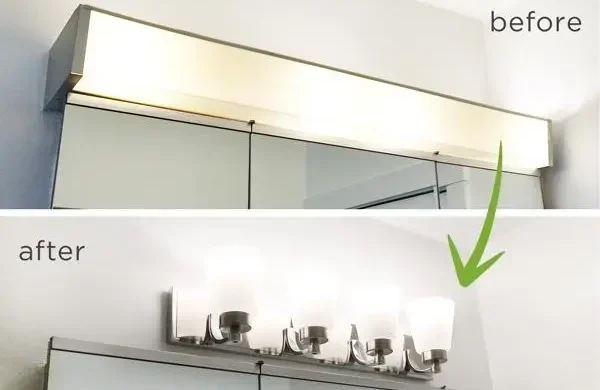
The kitchen and bathroom lighting mistake that ruins most wilmington remodels

The Kitchen and Bathroom Lighting MistakeThat Ruins Most Wilmington Remodels The Kitchen and Bathroom Lighting MistakeThat Ruins Most Wilmington Remodels The Kitchen and Bathroom Lighting MistakeThat Ruins Most Wilmington Remodels The Kitchen and Bathroom Lighting MistakeThat Ruins Most Wilmington Remodels Bathroom Remodeling Wilmington MA: The Kitchen and Bathroom Lighting Mistake That Ruins Most Wilmington Remodels Why homeowners in Wilmington, Burlington, Woburn, and Reading are rethinking lighting as the first decision — not the last — in every kitchen and bath remodel. Karen had been planning her Wilmington kitchen remodel for two years.She had done everything right. She spent months choosing her cabinetry — a warm, two-tone combination with natural oak lowers and a soft white upper. She selected a honed quartzite countertop that caught the light beautifully in the showroom sample. She chose a handmade ceramic tile backsplash that her designer called "the most characterful backsplash I have seen this year. Her appliances were professional-grade. Her island was exactly the size she had always wanted.Six weeks after the project was complete, she called us. It doesn’t look like I thought it would she said. Something is off and I can’t figure out what.We already knew the answer before we arrived. It almost always is the same answer: the lighting.Karen’s contractor had installed eight recessed downlights in a grid across the ceiling and called it done. No under-cabinet lighting. No pendants over the island. No consideration of how the warm oak tones, the matte quartzite, or the handmade tile would read under overhead-only illumination. The space that had looked stunning in the showroom looked flat, shadowless, and strangely institutional in her home.Her remodel cost over $80,000. The lighting budget was $600. 93% of homeownersrank high-quality lighting as one of their top priorities in a kitchen remodel — yet it is consistently the last decision made and the first place budgets get cut.Source: NKBA 2026 Kitchen Trends Report — survey of 634 designers, remodelers, and architects Why Lighting Is the Most Powerful — and Most Underestimated — Design Decision You Will Make Most homeowners think about lighting as a finishing touch. Choose some fixtures, plug them in, and the room is done. But professional designers and architects know something that most homeowners learn only after the fact: lighting is not a finishing touch. It is the filter through which every other design decision is experiencedThe cabinet color you fell in love with in the showroom was lit by carefully designed display lighting, positioned to bring out the warmth of the wood grain and the depth of the finish. Your quartzite countertop samples looked luminous because they were backlit and spot-lit at angles specifically chosen to show the movement in the stone. That handmade tile came alive under the right temperature of light.Take those same materials home, flood them with overhead grid lighting, and you will have a beautiful, expensive kitchen that nobody will ever describe as beautiful.In Wilmington, Burlington, Woburn, Reading, and Billerica, we see this pattern constantly. Homeowners invest serious money in quality materials and skilled craftsmanship — and then leave the lighting plan to the last week of a six-month project, or hand it entirely to an electrician who has never been asked to think about design.The good news is that it is entirely preventable. But only if lighting is treated as a design decision, not a logistics one — and only if it happens at the beginning of your remodel, not the end.74% of homeownerssay they use lighting specifically to improve their physical and mental wellbeing — making it a wellness decision as much as a design one. Source: NKBA 2025 Kitchen Trends Report The Three-Layer System Every Wilmington Kitchen Needs The reason most residential kitchens look underwhelming — regardless of the quality of materials inside them — comes down to a single omission: they rely on a single layer of light.The reason most residential kitchens look underwhelming — regardless of the quality of materials inside them — comes down to a single omission: they rely on a single layer of light. Layer one: Ambient lighting — the base Ambient lighting is your room's general illumination — the base level of light that makes the space usable. For most kitchens, this means recessed downlights, a ceiling fixture, or both. The mistake most homeowners make is stopping here. Ambient lighting alone creates flat, even illumination that eliminates shadows — and it is shadows, used intentionally, that create the sense of depth and dimension that make a room feel designed rather than merely lit.For Wilmington homes with open-plan kitchens that flow into living or dining areas, your ambient lighting scheme also needs to account for how the kitchen light interacts with the adjoining space — including color temperature transitions that can make a beautifully designed open floor plan look disjointed if handled carelessly. Layer two: Task lighting — the function Task lighting is placed specifically where work happens: under cabinets to illuminate countertops and prep zones, inside deep drawers or pantry cabinets so nothing disappears into shadow, and directly over the sink and cooking surface. It is the most practical layer of a lighting plan and, along with pendants over an island, the most immediately noticeable when missing. Under-cabinet lighting in particular transforms how a kitchen works day to day. It eliminates the shadow that your own body casts across the countertop when overhead lighting is the only source, making food prep safer, cleaner, and more enjoyable. For homeowners in Burlington and Woburn doing serious cooking in premium kitchens, under-cabinet lighting is not a luxury add-on. It is a fundamental part of how the kitchen functions. 92% of bath and kitchen designers agree: task lighting should always be included in aprimary kitchen or bath remodel. It is the layer most commonly omitted — and the one clientsmost often wish they had added. (NKBA 2026 Bath Trends Report) Layer three: Accent lighting — the design Accent lighting is where design intention becomes visible. It includes interior cabinet lighting that turns glass-front uppers

Diffrence of Ventilation of Bathrooom
Blog

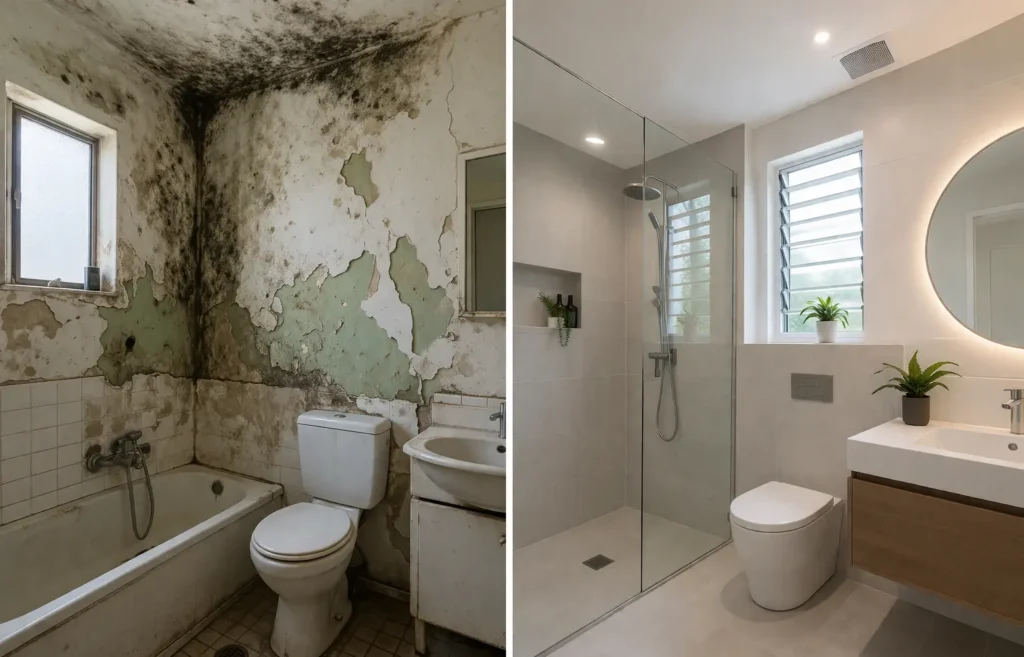
Ventilation moisture maintenance every homeowner must plan for

Bathroom Remodeling Wilmington MA: Ventilation, Moisture & Maintenance Every Homeowner Must Plan For When most homeowners think about bathroom remodeling in Wilmington, MA, they picture finishes first — tile, vanities, mirrors, lighting, and fixtures. That’s the exciting part!But here’s the reality: Bathrooms don’t fail because of design They fail because of moisture, poor ventilation, and lack of maintenance planning If those three are not handled correctly, even a beautiful remodel can develop: Mold Peeling paint Musty Odors Swollen cabinets Long-term damage Why Moisture Control Matters in Bathroom Remodeling Moisture control is critical in bathroom remodeling because trapped humidity can lead to mold growth, material damage, odors, and reduced indoor air quality. Proper ventilation and moisture-resistant materials help protect your investment and maintain a healthy home. Bathroom Remodeling Wilmington MA: A Beautiful Bathroom Is Still a Wet Room? Even the most modern bathroom is constantly exposed to: Steam from hot showers Water splashes Humidity buildup Daily wear and tear If you’re planning a bathroom remodel in Wilmington, MA, your space must be designed to: Dry quickly Handle humidity Resist moisture damage Without this: Caulk fails Paint peels Mold begins to form Bathroom Ventilation Requirements: What Homeowners Must Know Ventilation is not optional — it’s essential.For any bathroom remodeling project in Wilmington, MA, proper ventilation helps: Remove moisture Prevent mold Improve air quality Key guidelines: Minimum 50 CFM exhaust fan for small bathrooms Larger bathrooms require higher capacity Continuous ventilation improves performance Poor ventilation = trapped moisture Trapped moisture = long-term damage Best Exhaust Fan for Bathroom Remodel: Why Selection MattersMany homeowners install fans that: Are too noisy Are too weak Don’t get used consistently That’s a problem.When choosing the best exhaust fan for a bathroom remodel, consider: Quiet operation (encourages use) Proper sizing Energy efficiency Humidity sensors A fan only works if people actually use it Mold is one of the biggest risks in bathroom remodeling. To prevent mold in your Wilmington MA bathroom remodel, focus on: Moisture control Proper ventilation Sealed surfaces Material selection Waterproof backer boards Mold-resistant drywall Quality grout and sealants Fast drying Good airflow Smart layout Control moisture → Reduce mold risk Moisture-Resistant Materials for Bathroom Remodeling Wilmington MA Not all materials are equal.In high-moisture areas, using the right materials is critical.For bathroom remodeling in Wilmington, MA, prioritize: Waterproof backer boards Moisture-resistant drywall High-quality tile and grout Durable cabinetry Cheap materials may look good initially But fail faster under moisture exposure Bathroom Design Showroom Wilmington MA: Why Material Selection Matters Choosing materials individually can lead to mismatched results.Working with a bathroom design showroom in Wilmington, MA helps you: Coordinate tile, fixtures, and finishes Ensure compatibility Improve long-term performance Design + function should work together Bathroom Remodel Maintenance Tips for Long-Term Performance A successful remodel isn’t just about installation — it’s about maintenance. Ask these questions: Will this surface show water spots easily? Is this grout easy to clean? Will cabinetry hold up in humidity? Can the room dry quickly after use? Smart choices now reduce future problems Frequently Asked Questions Why is moisture control important in bathroom remodeling? Moisture control is essential in bathroom remodeling because excess humidity can lead to mold growth, peeling paint, damaged cabinetry, and poor indoor air quality. Proper ventilation and moisture-resistant materials help protect your bathroom long-term. What are the ventilation requirements for a bathroom? Bathroom ventilation typically requires at least 50 CFM (cubic feet per minute) for small bathrooms. Larger bathrooms may need higher capacity fans. Proper ventilation removes moisture, prevents mold, and improves air quality. How can I prevent mold in a bathroom remodel? To prevent mold: Install proper ventilation (exhaust fan) Use moisture-resistant drywall and backer boards Seal grout and surfaces Ensure the bathroom dries quickly after use What is the best exhaust fan for a bathroom remodel? The best exhaust fan should be: Quiet (low sones rating) Properly sized (based on bathroom size) Energy-efficient Equipped with humidity sensors How do I maintain my bathroom after remodeling? Maintenance tips: Run exhaust fans during and after showers Wipe down wet surfaces Clean and reseal grout regularly Check for signs of moisture buildup Moisture control is essential in bathroom remodeling because excess humidity can lead to mold growth, peeling paint, damaged cabinetry, and poor indoor air quality. Proper ventilation and moisture-resistant materials help protect your bathroom long-term. Bathroom ventilation typically requires at least 50 CFM (cubic feet per minute) for small bathrooms. Larger bathrooms may need higher capacity fans. Proper ventilation removes moisture, prevents mold, and improves air quality. To prevent mold: Install proper ventilation (exhaust fan) Use moisture-resistant drywall and backer boards Seal grout and surfaces Ensure the bathroom dries quickly after use The best exhaust fan should be: Quiet (low sones rating) Properly sized (based on bathroom size) Energy-efficient Equipped with humidity sensors Maintenance tips: Run exhaust fans during and after showers Wipe down wet surfaces Clean and reseal grout regularly Check for signs of moisture buildup 📋 Table of Contents Why Moisture Control Matters Bathroom Ventilation Requirements How to Prevent Mold Moisture Resistant Materials Why Material-Selection Matters Tips for Long Term Performance FAQ Products and Services Kitchen Remodeling Bath Remodeling Home Design Cabinetry Faucets and Fixtures Decorative Hardware Flooring Tiles How can we help you? Contact Us

Slabs
Blog

Quartz vs. Granite vs. Porcelain Slab: An Honest 2025 Guide for Massachusetts Homeowners

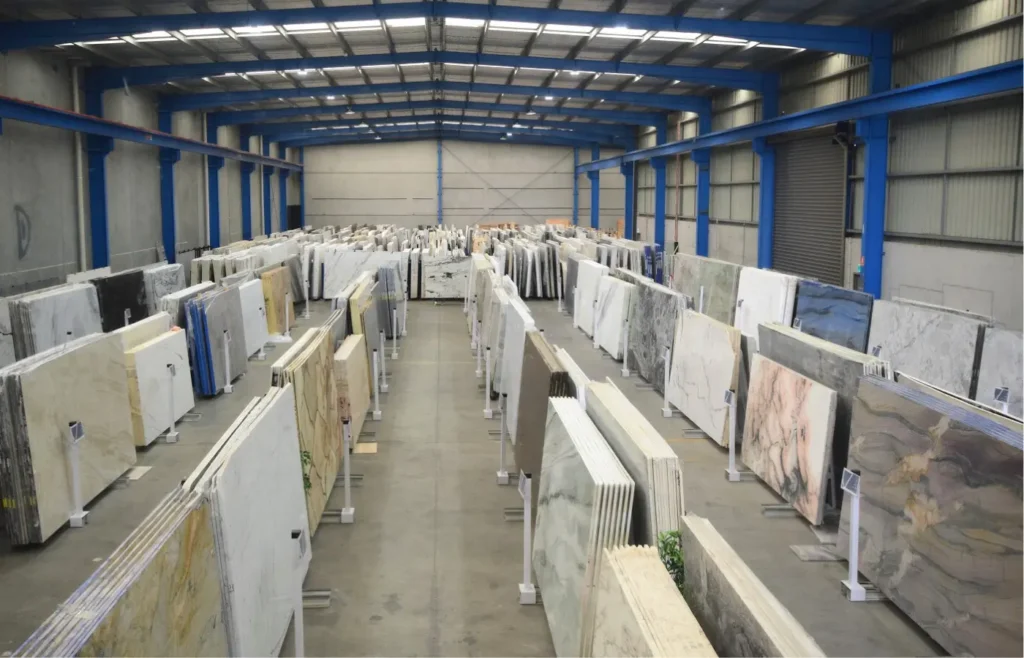
Countertops · Massachusetts · 2026 Buyer’s Guide Quartz vs. Granite vs. Porcelain Slab: An Honest 2026 Guide for Massachusetts Homeowners What is the best kitchen countertop material for Massachusetts homes? Quartz is the best all-around kitchen countertop material for most Massachusetts homeowners in 2026. It’s non-porous (no sealing required), highly durable, consistent in color, and holds up well to the heavy cooking and family use common in New England homes. Granite is a strong second choice for homeowners who prefer a natural stone look and don’t mind annual sealing. Porcelain slab is the premium choice — virtually indestructible and heat-resistant — but requires professional fabrication and costs more. The right answer depends on your lifestyle, your kitchen layout, and your budget. We break all three down in detail below. So here’s the straight version, from a design center that has been helping homeowners across Wilmington, Burlington, Woburn, Billerica, and the North Shore figure out exactly this question for years. These aren’t national averages padded with caveats. This is what kitchens actually cost in our market, right now, in 2025. Massachusetts Market Trend 61% of HSH Design clients in 2024 chose quartz as their primary countertop material. 28% chose granite. 11% chose porcelain slab — a number that has tripled in the past three years as porcelain becomes more available and fabricators get comfortable working with it. The Materials at a Glance Every kitchen remodel falls somewhere on a spectrum. Here’s how we break it down for our clients at HSH Design, and what’s typically included at each investment level in the Massachusetts market: Countertop Comparison Quartz Engineered stone · Most popular choice $65–$120 per sq ft installed Best for most kitchens Durability Maintenance Heat Resistance Natural Look Granite Natural stone · Classic beauty $55–$100 per sq ft installed Best natural stone value Durability Maintenance Heat Resistance Natural Look Porcelain Slab Ultra-premium · Nearly indestructible $80–$140 per sq ft installed Best performance material Durability Maintenance Heat Resistance Natural Look Quartz: The Workhorse That Won Massachusetts Kitchens Quartz countertops are engineered — made from about 90% crushed natural quartz stone bound with polymer resins and pigments. This manufacturing process gives quartz something granite and porcelain can’t fully match: absolute consistency. When you order a quartz slab in “Calacatta Laza,” every section of your countertop will look identical. For homeowners doing L-shaped or island kitchens — which is most of our clients in Wilmington and Burlington — that consistency is a huge visual advantage. What quartz is great at: No sealing required — ever. The resin binder makes quartz non-porous. Red wine, olive oil, tomato sauce, coffee — none of it absorbs into the surface. This is the #1 reason Massachusetts families with young kids choose quartz. Scratch resistance. Quartz scores 7 on the Mohs hardness scale. Normal kitchen use won’t scratch it — though we still recommend a cutting board (for your knives’ sake, not the countertop). Consistent color runs. When you need to replace a damaged section years later, you can usually match it. Wide price range. Entry quartz (think Silestone or MSI) starts around $65/sq ft installed. Premium brands (Cambria, Caesarstone) run $95–$120. Where quartz has limitations: Heat is its enemy. Unlike granite, quartz can be damaged by direct heat. Placing a hot pan directly from the stove can discolor or crack the resin. Always use trivets. If you cook constantly with cast iron at high heat, take note. UV sensitivity. Quartz can yellow or fade with prolonged direct sun exposure. Not a major issue for most kitchens, but relevant for sunroom or outdoor applications. It’s not natural stone. Some homeowners feel the engineered look lacks the depth of true granite. This is entirely personal — many people can’t tell the difference, especially with modern photographic-print quartz designs. ” We had a very personalized experience. Janet was very thoughtful and helpful in finding the right vanity for us. Everything arrived on time and without issue — the whole process from selection to installation was seamless. Celia Rodrigues Bath Vanity & Renovation Client · Google Review · HSH Design Inc. Granite: The Classic That Refuses to Die Every few years, someone declares granite “out.” It never actually goes out. Granite has been the material of choice in Massachusetts kitchens for decades because it’s genuinely beautiful, genuinely durable, and genuinely unique — every slab is one-of-a-kind.Granite is igneous rock, quarried and cut into slabs. It’s been forming underground for millions of years. A slab of granite in your kitchen will outlast every appliance you own, probably twice. What granite is great at: Cabinetry alone can swing your project budget by $20,000 or more. Here’s how the options compare in our market: Heat resistance. Set a hot pan directly on granite — it doesn’t care. This is a genuine advantage for serious cooks and bakers. Unique appearance. No two slabs are identical. If you want something that looks truly handcrafted and organic, granite wins this category over quartz every time. Cost. Good quality granite typically comes in slightly under equivalent quartz — often $10–$20/sq ft less installed. Scratch resistance. Granite is one of the hardest natural materials — it’s difficult to scratch with normal kitchen tools. Where granite has limitations: It requires annual sealing. Granite is porous. Without sealing, it will absorb liquids over time — and red wine or cooking oil stains that soak in can be permanent. With proper sealing (15–30 minutes, once per year), this is manageable — but it’s a maintenance commitment quartz doesn’t require. Color matching is nearly impossible. If you crack a granite countertop and need to replace one section, matching the slab exactly is extremely difficult. Each slab is unique. Radon concerns (minimal, but real). Some granite varieties contain naturally occurring trace levels of uranium and emit tiny amounts of radon. The EPA notes that granite countertops are unlikely to be a significant radon source, but it’s worth knowing. Janet’s take on granite in Massachusetts: “Granite is still a beautiful, smart choice for families who love to cook and

Budget-Pie-Chart
Blog

How Much Does a Kitchen Remodel Cost in Massachusetts?

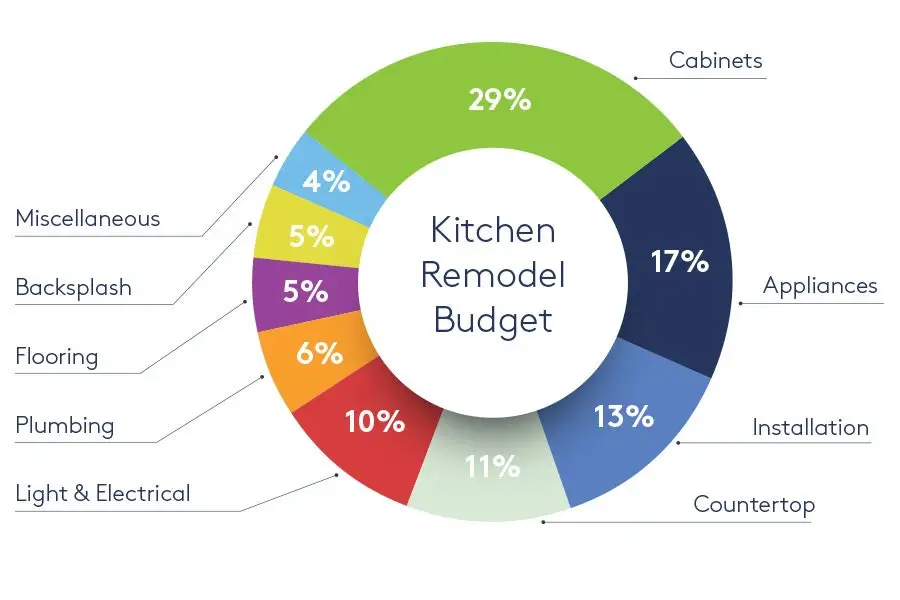
Kitchen Remodeling · Massachusetts · 2026 Guide How Much Does a Kitchen Remodel Cost in Massachusetts? (2026 Real Numbers) We’ve designed and built hundreds of kitchens across Wilmington, Burlington, Woburn, and the North Shore. Here’s exactly what Massachusetts homeowners are paying — no sugarcoating. $25K Entry-level refresh $75K Mid-range remodel $150K Full custom kitchen 80% Avg. cost recovered at resale Let’s be honest: one of the first things most Massachusetts homeowners do when they start thinking about a kitchen remodel is Google “how much does it cost?” — and then immediately close the tab when they see numbers that range from $15,000 to $150,000 with zero explanation.So here’s the straight version, from a design center that has been helping homeowners across Wilmington, Burlington, Woburn, Billerica, and the North Shore figure out exactly this question for years. These aren’t national averages padded with caveats. This is what kitchens actually cost in our market, right now, in 2025. Massachusetts Market Data 67% of Massachusetts homeowners say their kitchen remodel exceeded their initial budget estimate — primarily because they didn’t account for labor costs in the Greater Boston market, which run 20–35% higher than the national average. (Remodeling Magazine, 2024 Cost vs. Value Report, New England Edition) The Real Cost Ranges: What You Get at Each Level Every kitchen remodel falls somewhere on a spectrum. Here’s how we break it down for our clients at HSH Design, and what’s typically included at each investment level in the Massachusetts market: Tier Investment Range What’s Included Best For Refresh Entry $25K – $45K New cabinet doors/fronts, updated countertops (quartz or laminate), new hardware, faucet, backsplash tile, lighting Homeowners keeping the existing layout; flipping or preparing to sell Standard Remodel Mid $50K – $85K Semi-custom cabinetry (full tear-out), quartz or granite countertops, tile backsplash, new fixtures, appliances, some layout modifications The most common project type for MA homeowners staying in the home 5–10 years Upscale Remodel Full $90K – $130K Full custom or premium semi-custom cabinetry, stone countertops, large-format tile, custom island, designer fixtures, structural modifications possible Long-term homeowners who want the kitchen of their dreams Luxury / Full Custom Ultra $140K – $250K+ Full architectural cabinetry, waterfall islands, premium stone slabs, built-in appliances, ceiling details, custom lighting plans High-end homes in Lexington, Winchester, Lynnfield, or coastal communities The most common budget mistake we see: Homeowners budget for cabinets and countertops — and forget that labor, permits, plumbing rerouting, electrical panel upgrades, and disposal can add $15,000–$30,000 to a project in the Greater Boston area. Always get a full scope from your contractor before setting your number. Where Does the Money Actually Go? Here’s a typical breakdown for a mid-range kitchen remodel (around $65,000) in Middlesex County, Massachusetts: Labor & Installation $18,000 – $22,000 • 30–35% Cabinetry $15,000 – $20,000 • 25–30% Countertops (Quartz/Granite) $5,000 – $12,000 • 10–15% Appliances $4,000 – $15,000 • 10–15% Plumbing & Electrical $4,000 – $8,000 • 8–10% Tile, Flooring & Backsplash $3,000 – $7,000 • 6–8% Fixtures, Lighting, Hardware $2,000 – $5,000 • 4–6% Permits & Design Fees $1,500 – $4,000 • 3–5% ” Cannot say enough about my new kitchen — the quality and design is exceptional. Janet was a pleasure to work with and gave me wonderful ideas. The work was perfection and I can and will recommend HSH to anyone looking for quality work and products. Christine Kitchen Remodel Client · Google Review · HSH Design Inc. The 5 Biggest Cost Drivers in a Massachusetts Kitchen Remodel 1. Your Layout — Are You Moving Walls or Plumbing? The most expensive thing you can do in a kitchen remodel is move the sink, relocate the gas line, or remove a wall. In Massachusetts, moving plumbing adds $3,000–$8,000 to a project. Removing a load-bearing wall (common in older Wilmington-area colonials) can cost $5,000–$15,000 including structural engineering and beam work. If you can achieve your vision while keeping plumbing and appliances in their current locations, you’ll save significantly. 2. Cabinet Selection: The Single Largest Variable Cabinetry alone can swing your project budget by $20,000 or more. Here’s how the options compare in our market: Stock cabinets (box stores): $3,000–$8,000 for materials. Limited sizes, assembly required. Semi-custom (like Bertch Marketplace or 802 Cabinetry): $8,000–$18,000. More size options, better materials, real dovetail construction. Full custom: $20,000–$50,000+. Built to your exact dimensions, any finish, any wood species. For most Massachusetts homeowners doing a standard remodel, semi-custom hits the sweet spot — you get real quality without paying the custom premium for a layout that doesn’t require it. 3. Countertop Material Massachusetts homeowners increasingly choose quartz (engineered stone) over granite for kitchens — it’s non-porous, doesn’t require sealing, and comes in consistent colors. Expect to pay: Quartz: $65–$120 per sq ft installed. A typical kitchen (40–50 sq ft of counter) runs $3,500–$6,000. Granite: $55–$100 per sq ft installed. Slightly lower, more variation in appearance. Porcelain slab: $80–$140 per sq ft. The premium pick — scratch-resistant, heat-safe, stunning veining. 4. Labor Costs in Greater Boston Are Real This is the one most people underestimate. Labor in Middlesex County runs 20–30% above the national average. A licensed carpenter in Wilmington or Burlington charges $85–$130/hour. Electricians and plumbers run $100–$160/hour. Permits from most Massachusetts towns cost $500–$2,000 depending on scope. These aren’t negotiable — they’re the cost of doing quality work legally in our market. The HSH Design + GJ Miller advantage: Because our sister company GJ Miller & Sons has been building kitchens in this area for 30+ years, we’ve eliminated the coordination markup that adds 15–20% when your designer and contractor are different companies. One family. One estimate. No finger-pointing. 5. The Age of Your Home Massachusetts is full of beautiful 1960s–1990s colonials, ranch homes, and Capes — and they all have surprises. Asbestos floor tiles under old vinyl ($1,500–$4,000 to remediate), outdated 100-amp panels that need upgrading for modern appliances ($3,000–$6,000), old cast-iron drain lines — these are common discoveries in renovation projects in Wilmington, Woburn, and Burlington. Budget a 10–15% contingency fund for discoveries. Not Sure What Your Kitchen Will Cost?

Vanity-Before-After
Blog

Bathroom Trends That Add the Most Value Before Listing

List-Ready Bathroom Upgrades Top trends buyers notice in Burlington & Wilmington What Burlington & Wilmington, MA Homeowners Should Know Before They Sell This Spring Spring in the Burlington–Wilmington corridor is when buyers move fast and sellers compete for top dollar. In a hot market, you don’t always need a full renovation—but you do need a bathroom that photographs clean, feels current, and signals “move-in ready.” This guide breaks down the bathroom trends that add the most value before listing, plus a simple decision framework so you don’t overspend (or under-improve). The focus is on upgrades that buyers notice immediately during showings and open houses in Burlington,  Wilmington, Woburn, Reading, Billerica, Tewksbury, Lexington, Bedford, and nearby towns. Fastest ROI Visual Upgrade The ROI reality check (how “value” really works) “Adds value” means two things in real estate:       1. Cost recovery: how much you recoup in resale value       2. Buyer confidence: how quickly buyers stop negotiating and start offering strong National remodeling benchmarks consistently show that midrange bathroom upgrades tendto out perform luxury builds for res ale. For example, the 2025 Cost vs. Value Report lists a midrange bathroom remodel at $26,138 with an estimated $20,915 in resale value—about 80% cost recouped.And here’s the part sellers often miss: buyers aren’t just paying for materials. They’re paying for certainty. A bathroom that feels new reduces perceived risk, inspection anxiety, and “we’ll do it later” friction. What buyers notice in the first 30 seconds Before trends, focus on what buyers subconsciously score immediately: Bright + clean lighting (no yellow, dim fixtures) No humidity smell (ventilation matters in New England) Cohesive finishes (faucet, hardware, lighting all match) A vanity that looks modern and solid A shower/tub that reads low-maintenance (not stained grout / dated tile) If you fix these five, your bathroom instantly feels more valuable—even if the layout stays the same. 9 bathroom trends that add the most value before listing A) Spa-inspired bathrooms (the buyer trend that keeps showing up) Zillow’s 2026 trends data found mentions of wellness features up 33% and spa-inspired bathrooms up 22% in listings.Translation: buyers are responding to bathrooms that feel like a daily reset—calm, clean, and intentional.Seller-smart way to do it (without a full gut): Warm neutral paint + crisp trim A cleaner, simpler shower look (glass + fewer visual breaks) A curated finish palette (2–3 finishes max) B) The “vanity wall upgrade” (highest impact for photos) If you can only update one zone, update the vanity area. It dominates listing photos and buyer eye-line.High-value recipe: Shaker-style vanity Quartz/stone-look top Updated faucet + matching hardware Modern mirror + lighting This is the “looks expensive, isn’t always expensive” upgrade buyers trust. C) Lighting as a value multiplier (and it makes everything look newer) Bathrooms lose value when lighting is harsh, dim, or mismatched. Great lighting makes paint, tile, and fixtures feel premium.What works: Bright, even vanity lighting (clean lines) Layered lighting when possible (ceiling + vanity) Consistent bulb temperature so the room doesn’t look “off” in photos D) Large-format tile (premium look, fewer grout lines) Large-format tile is popular because it reads modern and is easier to keep looking clean (less grout to discolor).Seller-safe approach: Neutral tones with warmth (not overly trendy) Simple patterns that won’t date the listing E) Walk-in showers with simple “buyer features” You don’t need a dramatic luxury shower—just the features buyers expect in a refreshed bath.Top value details:  A built-in niche (removes clutter) Clean glass lines (frameless look if budget allows) A shower head/fittings that match the rest of the bath F) Better ventilation + humidity-proof durability In Massachusetts, buyers notice humidity issues fast (and so do inspectors). A quiet, effective fan and moisture-resistant finishes protect your investment.Value signals: Properly working exhaust fan Mold-resistant paint Fresh caulk lines and clean transitions at tile/plumbing This won’t be the most “Instagram” upgrade, but it removes deal-killing doubt. G) Warm, modern paint (fastest “new bathroom” illusion) Paint is a pre-listing weapon—especially when paired with updated lighting. Zillow’s consumer-facing guidance on bathroom refreshes consistently emphasizes small updates that quickly change buyer perception.Seller-safe rule: choose warm neutrals that match the rest of the home, and keep it consistent across bathrooms. H) Storage upgrades that make the room feel bigger Clutter kills perceived space. Storage increases perceived value.High-impact options: Recessed medicine cabinet Drawer organizers Slim linen cabinet or built-in shelving that looks intentional In showings, buyers mentally “move in.” Storage makes that easier. I) The bathtub decision (keep it, refresh it, or go shower-first?) This is the most common pre-listing mistake: removing the only tub in a home that appeals to families.Practical guideline for Burlington/Wilmington listings: If it’s the only tub, keep a tub (or choose a tub/shower combo that looks new). If there’s another tub elsewhere, a walk-in shower can become a selling feature. Either way, the key is that it looks clean, current, and low-maintenance. The pre-listing timeline (so you don’t miss the spring window) If you’re listing in 2–3 weeks (quick wins): Paint + bright bulbs New mirror + lighting New faucet/hardware Refresh caulk and deep-clean grout lines If you have 4–6 weeks (best balance of impact + control): Vanity + top + faucet Flooring refresh if dated Shower glass/enclosure improvements If you have 8+ weeks (bigger upgrades): Shower tile refresh / layout tweaks More substantial finish upgrades and storage improvements A design tip that prevents “expensive-looking mistakes”Most bathrooms look “cheap” for one reason: mismatched finishes. Sellers buy items separately and end up with mixed metal tones, clashing whites, or competing patterns.A showroom-based selection plan solves that fast: Choose tile + countertop + vanity finish together under the same lighting Lock 2–3 finishes total (example: brushed nickel + warm white + light oak) Create a simple “selections checklist” you can hand to your installer This prevents decision fatigue and keeps the project on schedule. What the data says about bathrooms (why it’s a smart room to improve) NAR’s 2025 Remodeling Impact Report ranks Bathroom Renovation among the top “joy score”

Scroll to Top